
In competitive sports and gaming, outcomes often hinge on a few critical moments. Understanding momentum shifts in sports isn’t just helpful—it’s essential for athletes, competitors, and fans who want to see the game beyond the scoreboard. Whether you’re looking to sharpen your strategy, improve performance, or optimize your gear for a competitive edge, this article breaks down how momentum builds, swings, and decides results at every level of play.
We analyze real game scenarios, performance data, and proven competitive tactics to show you exactly how and why these shifts happen. Instead of surface-level commentary, you’ll get practical insights you can apply immediately—whether you’re competing on the field, on the court, or in a high-stakes gaming environment.
By the end, you’ll understand how to recognize turning points early, respond strategically, and create momentum rather than just react to it.
The feeling of competition has fundamentally changed. Raw talent and traditional practice are no longer enough to guarantee victory.
Back in 2019, teams still trusted instinct over data; by 2024, after three seasons of analytics arms races, the gap became obvious.
Athletes clinging to old playbooks are being outmaneuvered, because momentum shifts in sports now hinge on pattern recognition, recovery science, and real-time decision loops.
Talent still matters (it always will), but preparation has evolved into a competitive architecture built on three pillars: data intelligence, adaptive strategy, and optimized load management.
Over thousands of hours of breakdowns, this pattern repeats.
The Data Revolution: From Gut Instinct to Algorithmic Precision
For decades, coaches relied on experience and instinct. Film study, locker room speeches, and a “feel” for the game ruled decision-making. However, real-time data has become the third coach on the field and in the arena. According to a 2023 Deloitte sports industry report, over 70% of elite teams now integrate advanced analytics into weekly preparation. That shift isn’t cosmetic—it’s structural.
Wearables and the Rise of Biometric Intelligence
Wearable technology has transformed performance science from reactive to predictive. Devices tracking heart rate variability (HRV), muscle load, and sleep cycles generate continuous feedback loops. Research published in the British Journal of Sports Medicine shows that monitoring HRV can significantly reduce overtraining risk when paired with adjusted workloads. In practical terms, that means fewer soft-tissue injuries and more consistent output.
Critics argue that athletes become “over-reliant” on numbers, losing instinct. Yet the data suggests the opposite. Teams combining biometric tracking with subjective self-reports see improved recovery alignment and fewer missed games. It’s Moneyball, but with muscles.
Predictive Analytics in Strategy
Meanwhile, AI-driven scouting models analyze thousands of plays in minutes. Some NFL analytics departments report predicting opponent third-down play calls with over 70% accuracy by identifying formation tendencies and situational biases. That edge often determines momentum shifts in sports.
Of course, models aren’t magic. Weather, emotion, and randomness still matter. But layered probability beats guesswork.
Actionable insight: Start small. Use a performance app to log training intensity alongside sleep quality and recovery scores. After 30 days, look for patterns—declines in sprint speed after poor sleep, for example. (The numbers rarely lie.) Pro tip: consistency in tracking matters more than complexity.
Gear Optimization and Bio-Hacking: The Science of Marginal Gains
Elite performance no longer hinges on buying better gear off the shelf. It’s about hyper-personalization. Think 3D-printed cleats tailored to your exact foot pressure map, custom-molded controller grips that reduce micro-slippage in overtime, and aerodynamic apparel tested in wind tunnels. These aren’t luxuries; they’re engineered advantages measured in milliseconds.
The Body as a System
“Bio-hacking” sounds futuristic, but at its core it means treating the body like an interconnected system. Personalized nutrition based on genetic markers aims to optimize how you metabolize carbs or recover from inflammation. Advanced recovery tools—cryotherapy (cold exposure for inflammation control) and compression tech (targeted pressure to improve circulation)—help reduce downtime. Neuro-stimulation devices claim to sharpen focus by modulating brain activity.
Now, to be clear, not all of this is universally proven. Some genetic nutrition claims are still debated in sports science circles, and neuro-stimulation results can vary widely. We don’t have every answer yet. But enough peer-reviewed evidence supports recovery optimization and equipment customization to justify careful experimentation (Pro tip: test one variable at a time so you can measure impact).
The Aggregation of 1% Improvements
The magic isn’t one breakthrough—it’s stacking small gains. British Cycling popularized this “marginal gains” philosophy, showing how tiny refinements compound into dominance (Clear, 2018). It’s the same logic behind studying momentum shifts in sports or analyzing the 5 iconic momentum swings that redefined championship matches.
Your Practical Gear Audit
Pick one upgrade: insoles calibrated to your stride or a structured sleep routine tracked with wearables. Measure performance before and after. If it improves output—even slightly—you’ve started building your competitive edge.
The Psychological Battlefield: Mastering Momentum Moments
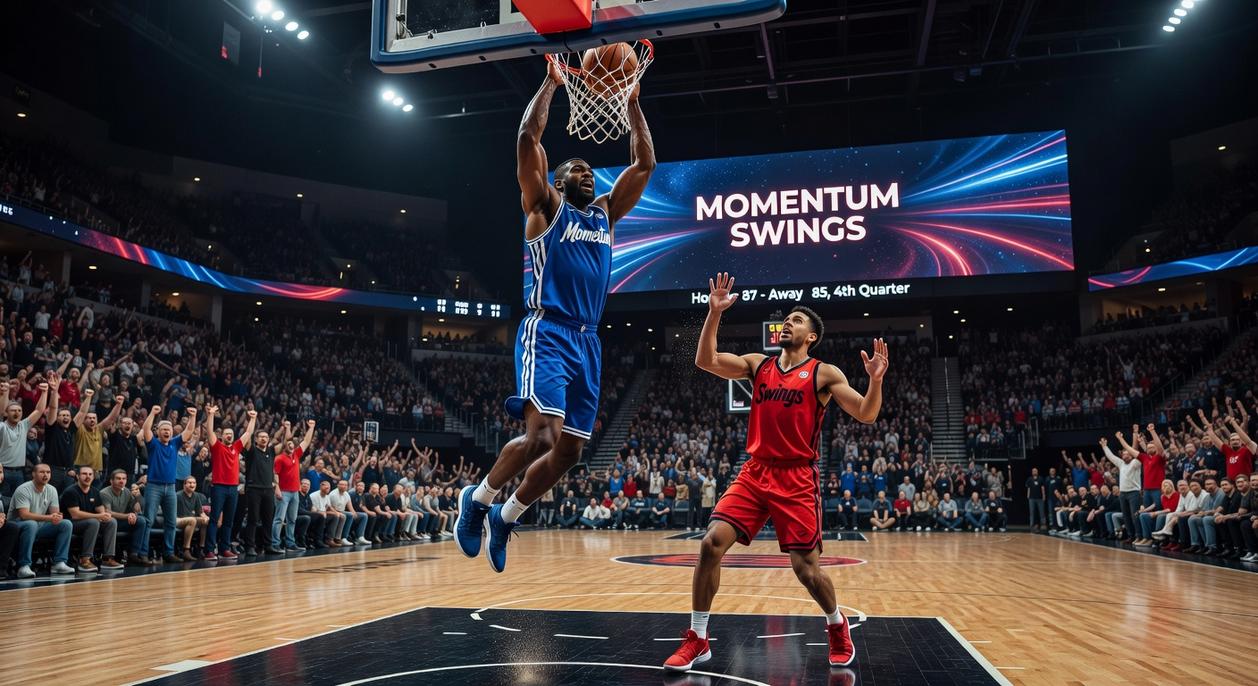
Defining the new momentum starts with clarity. A Momentum Moment isn’t just a hot streak or a lucky bounce. It’s a psychological inflection point—a split second where belief transfers from one competitor to another. These moments are shorter, more frequent, and more decisive than ever. Think of a missed penalty kick followed immediately by a fast-break goal on the other end. The scoreboard changes—but more importantly, so does body language. (You can almost see shoulders rise and slump in real time.)
Some argue that talent always wins out and that psychology is overrated. If a team is better, they’ll prevail eventually. That sounds reasonable. But research in sport psychology shows perceived momentum significantly affects decision-making and risk tolerance (Iso-Ahola & Dotson, 2014). In high-speed environments, confidence isn’t fluff—it’s fuel.
The Digital Amplifier makes this even more intense. Instant replays dissect mistakes. Social media reacts within seconds. Live analytics quantify failure and success mid-game. In traditional momentum shifts in sports, pressure was contained to the arena. Now it’s global, immediate, and permanent. (Miss once, trend worldwide.)
So what should you do?
Cognitive training must become non-negotiable. Elite competitors now use visualization to rehearse adversity, simulation drills to build resilience, and rapid emotional reset techniques to prevent spirals. The recommendation is simple: train your mind with the same rigor as your mechanics.
To win a Momentum Moment:
- Recognize the trigger. A turnover, controversial call, or sudden score.
- Execute a reset routine. Try a 4-4 breathing cycle to lower cortisol (Jerath et al., 2015).
- Seize initiative. Choose a high-percentage, assertive action immediately.
Pro tip: Pre-plan your reset before competition. Under stress, you don’t rise to the occasion—you fall to your preparation.
Momentum favors the prepared mind. Always.
Mastering the Modern Competitive Arena
Modern competition is a three-front war: data, technology, and mindset. Research from McKinsey shows data-driven teams are 23% more likely to outperform peers. Yet many athletes still rely on raw skill alone. That’s like bringing a sword to a drone fight (brave, but outdated).
To win, become a systems thinker:
- Analyze performance metrics weekly.
- Optimize gear using sport-specific testing data.
- Train for psychological turning points.
Championship teams deliberately Use momentum shifts in sports in the section once exactly as it is given to reclaim control. Identify your weakest front—and close it.
Take Control of the Game’s Turning Point
You came here to understand how to recognize and capitalize on momentum shifts in sports — and now you know exactly what to look for. From tactical adjustments to energy swings and performance cues, you’ve seen how quickly games can tilt in one direction and why most players and competitors miss those critical windows.
The truth is, losing control of momentum is often the difference between winning and watching the opportunity slip away. When you fail to anticipate momentum shifts in sports, you’re always reacting instead of dictating the pace.
Now it’s your move.
Apply these insights in your next game, match, or competitive session. Break down your recent performances, identify where momentum changed, and adjust your strategy accordingly. If you’re serious about gaining a competitive edge, dive deeper into advanced breakdowns, performance insights, and gear optimization strategies designed to help you stay one step ahead.
Thousands of competitive athletes and gamers are already sharpening their edge with proven tactical analysis. Don’t let momentum control you — learn to control it. Start implementing these strategies today and turn the next shift into your advantage.