I’ve seen thousands of PC gamers hit the same wall.
You put in the hours. You know the maps. Your aim is decent. But you’re stuck at the same rank watching players who seem barely better than you climb past.
Here’s the truth: grinding more games won’t fix this.
The gap between casual and competitive isn’t about talent. It’s about approach. Most players focus on mechanics and ignore everything else that actually wins matches.
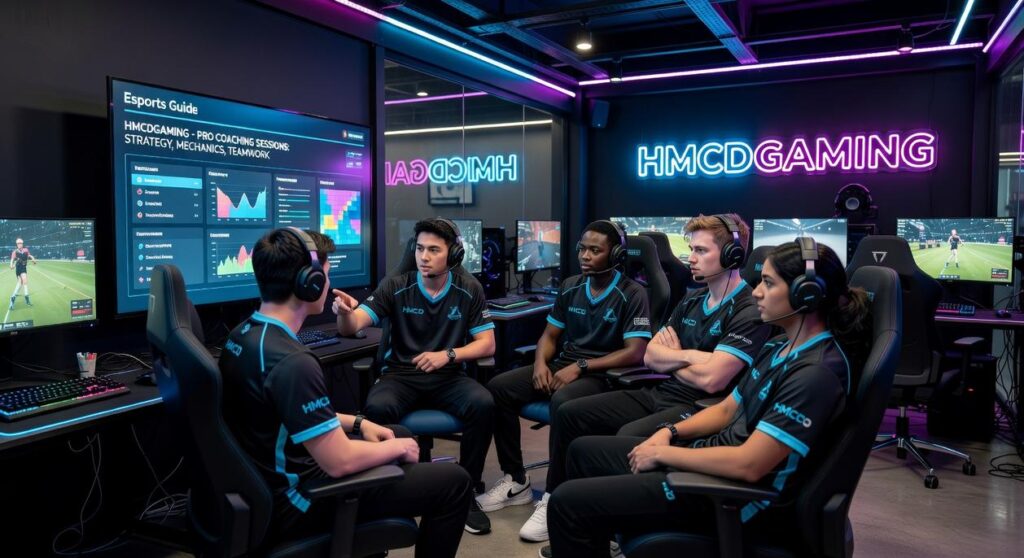
I built HMCD Gaming to show you what separates players who plateau from players who break through. We study how top competitors actually train, not just how they play.
This guide covers the complete system. Gear setup that gives you real advantages. Mental conditioning that keeps you sharp in clutch moments. Performance habits that compound over time.
We’ve broken down the methods that work at the highest levels of competitive play. The stuff that doesn’t make highlight reels but shows up in win rates.
You’ll learn how to build a training structure that actually moves your rank. Not theory. Not motivational garbage. Just the framework that works.
If you’re ready to stop spinning your wheels and start climbing, this is where it starts.
Your Digital Arena: Gear Optimization for Peak Performance
Let me clear something up right now.
That RGB-loaded setup with the glowing fans and rainbow keyboard? It looks cool. But it won’t make you a better player.
I see players drop thousands on gear that looks competitive without understanding what actually matters in the arena.
Here’s what does matter.
The Core Trinity
Your CPU, GPU, and RAM work together for one goal. Consistent framerates.
Notice I said consistent. Not high. Consistent.
A stable 240 FPS beats an unstable 300 FPS every single time. When your frames bounce between 280 and 320, your muscle memory can’t adapt. Your shots feel different every engagement.
That inconsistency? It gets you killed.
Your GPU handles the rendering. Your CPU processes game logic and physics. Your RAM keeps everything flowing without stutters. They need to work in sync.
Visuals that Win
You need a high-refresh-rate monitor. Period.
144Hz is the minimum. I recommend 240Hz or higher if you’re serious about competitive play.
Pair that with a 1ms response time. Anything slower and you’re seeing old information (even if it’s just milliseconds, those milliseconds count when someone peeks you).
Your Control Surface
Your mouse needs two things. Low weight and a flawless sensor.
Heavy mice force you to work harder for the same movement. Flawed sensors skip pixels or add acceleration you didn’t ask for.
Your keyboard should be mechanical with predictable actuation. You need to know exactly when each keypress registers. Mushy membrane boards introduce uncertainty.
Your headset gives you spatial audio. Hearing footsteps before you see the enemy isn’t cheating (it’s just smart).
The esports guide hmcdgaming breaks down these specs in detail. But the principle stays simple.
Performance over appearance. Stability over peaks. Consistency over flash.
The Gamer as an Athlete: Mental and Physical Conditioning
You know what nobody tells you about competitive gaming?
Your body gives out before your mind does.
I learned this the hard way during a tournament qualifier back in 2019. Third map, overtime, and my right hand cramped so badly I couldn’t hit my ult key. We lost a round we should’ve won because I thought stretching was something old people did.
That was embarrassing.
But it taught me something. If you want to compete at a high level, you can’t just grind mechanics. You need to treat your body and mind like any other athlete would.
Managing the Mental Stack
Competitive gaming dumps information on you constantly. Enemy positions, cooldown timers, ultimate percentages, teammate callouts. It never stops.
Your brain can only hold so much before it starts dropping things.
I’ve found that the best players don’t try to track everything. They build systems. They prioritize what actually matters in the moment and let the rest go.
Here’s what works for me:
- Track enemy ultimates first, your cooldowns second
- Use audio cues to reduce visual load (footsteps tell you more than you think)
- Assign one thing to muscle memory each session until it becomes automatic
- Keep callouts short and specific
When you stop trying to consciously think about every detail, you free up mental space for the reads that actually win rounds.
Tilt-Proofing Your Mindset
Lost a round because your teammate whiffed?
Yeah, me too. About a thousand times.
The difference between good players and great ones isn’t mechanical skill. It’s how fast you reset after something goes wrong.
I use a simple rule now. After a bad round, I take three deep breaths before the next one starts. Sounds basic, but it works. It gives my brain just enough time to let go of what happened and focus on what’s next.
Blaming teammates feels good in the moment (and sometimes they really do mess up). But it doesn’t help you win. The only thing you control is your next decision.
The Power of VOD Review
Want to know the fastest way to get better?
Watch yourself play.
I know, I know. It’s painful. Watching your own mistakes feels worse than making them in real time.
But here’s the thing. You can’t fix patterns you don’t see. And trust me, you have patterns. We all do.
I spend 30 minutes every week reviewing my gameplay. I’m not looking for highlight plays. I’m looking for the same mistake showing up over and over.
Do I always peek the same angle? Do I panic and waste my utility early? Do I position too far forward when we’re up in rounds?
Once you spot the pattern, you can actually fix it. This esports guide hmcdgaming approach has helped me climb faster than any amount of raw practice ever did.
Physical Performance Matters More Than You Think
Here’s something most gamers ignore until it’s too late.
Your reaction time tanks when you’re tired. Your decision making gets sloppy. Your aim gets shaky.
Sleep isn’t optional if you want to perform. Studies show that even one night of bad sleep can slow your reactions by 10-15%. That’s the difference between hitting a shot and missing it.
And don’t get me started on ergonomics. If your setup forces you into weird positions, you’re setting yourself up for wrist and back problems that’ll end your competitive career before it starts.
I do hand stretches before every session now. Takes two minutes. Keeps my fingers loose and prevents that cramping I mentioned earlier.
Simple stuff like keeping your monitor at eye level, your chair at the right height, and your keyboard positioned so your wrists stay neutral? That’s not comfort. That’s performance.
The players who treat gaming like a sport (because are esports popular hmcdgaming has proven it is) are the ones who last. The ones who ignore their bodies? They burn out or get injured.
Your choice.
Deconstructing Victory: Advanced In-Game Strategies
You know that feeling when a match suddenly shifts?
One second you’re up three rounds. The next, you’ve lost five straight and your team is tilting.
That’s not random. That’s a momentum moment.
I’m talking about those specific points in a game where everything changes. In Counter-Strike, it’s the round where you break the enemy’s economy and force them onto pistols. In League of Legends, it’s securing Baron right before the enemy’s carry hits their power spike.
These moments DECIDE games. Not your aim. Not your mechanics. These.
According to competitive match data from the 2023 BLAST Premier, teams that won the first pistol round in CS:GO won 73% of matches (HLTV, 2023). That’s one round dictating an entire series.
Some players say momentum is just psychological. They argue that every round starts fresh and past results don’t matter.
But the numbers don’t lie. When you understand these moments, you can create them. Or stop them.
Capitalizing on Advantage
Here’s what most players get wrong.
They win a big fight and then… nothing. They play the same way they did when the score was tied.
When you have momentum, you need to PRESS. Take map control. Force the enemy into bad positions. Make them react to you instead of executing their plan.
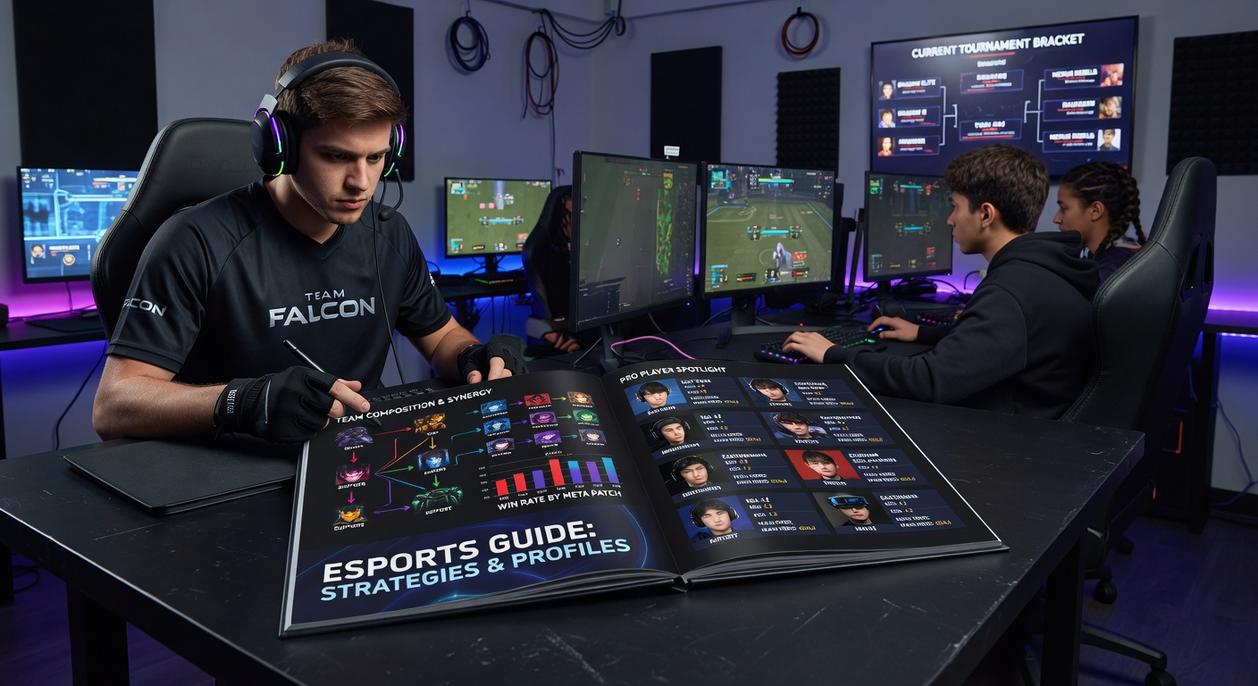
I’ve seen this work at the highest level. When Team Liquid secured match point at IEM Katowice, they didn’t sit back. They pushed aggressively and ended it in two minutes.
But what about when you’re down?
Play for the comeback. In FPS games, that means saving weapons when the round is lost. Don’t die with $4,000 in your inventory just to get one kill. In MOBAs, give up the tower and farm safely. You need gold more than you need to defend a structure you’ll lose anyway.
Strategy Breakdowns by Genre
Let me get specific.
For FPS Players
Your crosshair should already be where the enemy’s head will be. Not close to it. ON it.
Pro players don’t flick to targets. They place their crosshair at head level and strafe into position. According to aim lab data, pre-aiming reduces time-to-kill by an average of 180 milliseconds compared to reactive aiming (Aim Lab Performance Report, 2024).
Utility creates space. A smoke doesn’t just block vision. It forces enemies to reposition or wait. That’s three seconds where you control the map.
When you hold an angle, don’t stand still. Jiggle peek to gather information without committing. When you clear an angle, slice the pie. Check one position at a time so you’re never fighting two enemies at once.
For MOBA/Strategy Players
Wave management wins lanes before a single ability is cast.
If you’re freezing the wave near your tower, the enemy has to overextend to farm. That’s when your jungler gets a free kill. If you’re shoving hard, you create pressure that pulls enemies away from objectives.
Jungle pathing isn’t about clearing camps. It’s about being in position for the next play. Clear towards the lane that’s about to hit a power spike. Your mid laner hits level 6 in thirty seconds? You should be finishing raptors right now.
Power spikes are everything. A two-item carry beats a one-item carry even if they’re down in kills. That’s your window for Baron or Dragon Soul. The hmcdgaming esports gaming from harmonicode community has documented dozens of these timing windows across different games.
Deliberate Practice
Playing ranked for six hours isn’t practice.
That’s just playing.
Real practice is structured. Fifteen minutes in an aim trainer working on tracking. Twenty minutes running the same site execute until your utility lands perfectly every time.
Run 2v1 scenarios in custom games. You’ll lose most clutches in real matches, but if you’ve practiced the positioning fifty times, you’ll win more than you should.
Scrims matter more than ranked. In ranked, you’re playing against random strategies. In scrims, you’re testing specific reads against coordinated teams. That’s where you learn if your default setup actually works or if you’ve just been getting lucky.
Pro tip: Record your scrims and watch them at 1.5x speed. You’ll spot mistakes you never noticed in the moment.
The difference between good players and great ones? Great players treat practice like work. They drill the boring stuff until it becomes automatic.
Then when the momentum moment comes, they don’t think. They just execute.
Your Path to Competitive Excellence
You hit a wall and couldn’t break through.
I get it. Every competitive player faces that moment where practice stops translating into wins.
This guide gave you the blueprint. You learned about gear optimization, mental preparation, and strategic analysis. The three pillars that separate good players from great ones.
The truth is simple: gaming at a competitive level requires the same discipline as any other sport. You need structure, not just grind time.
Here’s your next move.
Pick one thing from this guide and commit to it for seven days. I recommend starting with a 15-minute VOD review after each session. Watch your gameplay, spot your mistakes, and write down one thing to fix.
That’s it. One week, one habit.
You’ll see improvement because you’re finally working smart instead of just working hard. esports guide hmcdgaming was built to give you these exact tactics that create Momentum Moments in your competitive journey.
The wall you hit isn’t permanent. It’s just feedback telling you to change your approach.
Start your seven-day challenge today.