

Winning consistently in competitive gaming and sports isn’t about luck — it’s about preparation, precision, and smart decision‑making. If you’re here, you’re looking for practical strategies that actually improve performance, sharpen in‑game awareness, and give you a measurable edge over the competition.
This article delivers exactly that. We break down momentum shifts, tactical adjustments, performance optimization techniques, and the critical skill of analyzing opponent strategies to help you anticipate moves before they happen. Whether you’re refining mechanics, improving reaction time, or optimizing your gear for peak output, you’ll find actionable insights you can apply immediately.
Our approach is grounded in real competitive analysis, performance research, and proven tactical frameworks used by high‑level players. Instead of vague advice, you’ll get clear breakdowns that connect strategy with execution.
If your goal is to compete smarter, adapt faster, and perform at your highest level, you’re in the right place.
The Art of the Counter-Play: Deconstructing Your Rival’s Game Plan
The championship clock is ticking, score tied, and one misread decides everything. In high-stakes arenas, victory hinges on predicting the next move.
Too often, competitors obsess over mechanics while ignoring an opponent’s adjustments; consequently, they become predictable and lose. Yet analyzing opponent strategies reveals patterns, timing tells, and resource habits that shift momentum.
This guide delivers a clear, repeatable framework: map tendencies, test assumptions, pressure weaknesses, and deploy decisive counter-plays. Drawing from thousands of hours of elite match study, it translates breakdowns into actionable advantages. For deeper tactical examples, see this analysis hub: https://example.com. Stay sharp and control momentum always.
Beyond the Replay: Gathering Actionable Intelligence
Watching replays is easy. Extracting insight is harder. The real edge comes from analyzing opponent strategies with intention—specifically focusing on when and why decisions happen.
First, track timing patterns. Do they always push after securing a minor objective? Rotate late in close games? Burn resources early when pressured? These habits reveal resource allocation priorities (how they distribute time, energy, or in-game assets). For example, some players consistently overcommit after gaining momentum—think of a basketball team forcing shots after a fast break (confidence can quietly become predictability).
Next, identify the “tell.” A tell is a subconscious, repeatable behavior that signals intent. Maybe they retreat to the same defensive angle when low on health. Maybe they become hyper-aggressive right after respawning. Once spotted, test it. Bait the scenario and see if they repeat it.
However, not every odd move is meaningful. Separate data from noise by focusing on high-impact decisions—objective control, power plays, late-game positioning. Random skirmishes matter less than consistent strategic choices.
So what should you do? Start logging patterns immediately. Review three matches, note repeated reactions under pressure, and build counters around those habits. If it happens twice, monitor it. If it happens three times, exploit it. Why guess when you can confirm?
Pillar 1 – Pacing & Tempo
First, ask yourself: do they sprint out of the gate or stall for late-game dominance? Pacing refers to how quickly a player forces engagements, while tempo is the pressure that dictates reactions. An aggressive rival stacks advantages; a defensive strategist absorbs and counters. Have you noticed them dictating when fights happen? If they control the clock, they control you (and that’s never accidental). Map their spikes and lulls to predict momentum shifts.
Pillar 2 – Resource Management
Next, consider how they treat resources. In competitive play, resources include economy, energy, cooldowns, and even attention. Are they cautious savers, waiting for perfect efficiency, or bold spenders chasing explosive swings? Think about it: have you ever lost because you burned everything too soon? Some argue constant pressure spending wins games. However, disciplined conservation often creates decisive windows. Track when they invest heavily and when they hold back; patterns reveal priorities.
Pillar 3 – Positional Philosophy
Now shift to space. Positioning is the art of controlling where engagements occur. Do they dominate the center, pressure the flanks, or strike and fade like a guerrilla unit? In analyzing opponent strategies, chart their preferred zones on the map. Where do they retreat? Where do they regroup? Moreover, compare this with zone vs man to man strategic adjustments explained (https://hmcdgaming.com/zone-vs-man-to-man-strategic-adjustments-explained/). Control of space often signals control of options.
Pillar 4 – The Win Condition
Finally, identify the win condition—the specific scenario that guarantees victory. This could be a late-game combo, a resource gap, or a positional lock. Ask yourself: what are they building toward? Every action should point somewhere. Some claim adaptability matters more than fixed goals. Yet without a clear objective, pressure lacks purpose. Trace their decisions backward from the endgame. When you see the finish line they’re chasing, you can block it (and flip the script).
Setting the Trap: Turning Their Strengths into Weaknesses
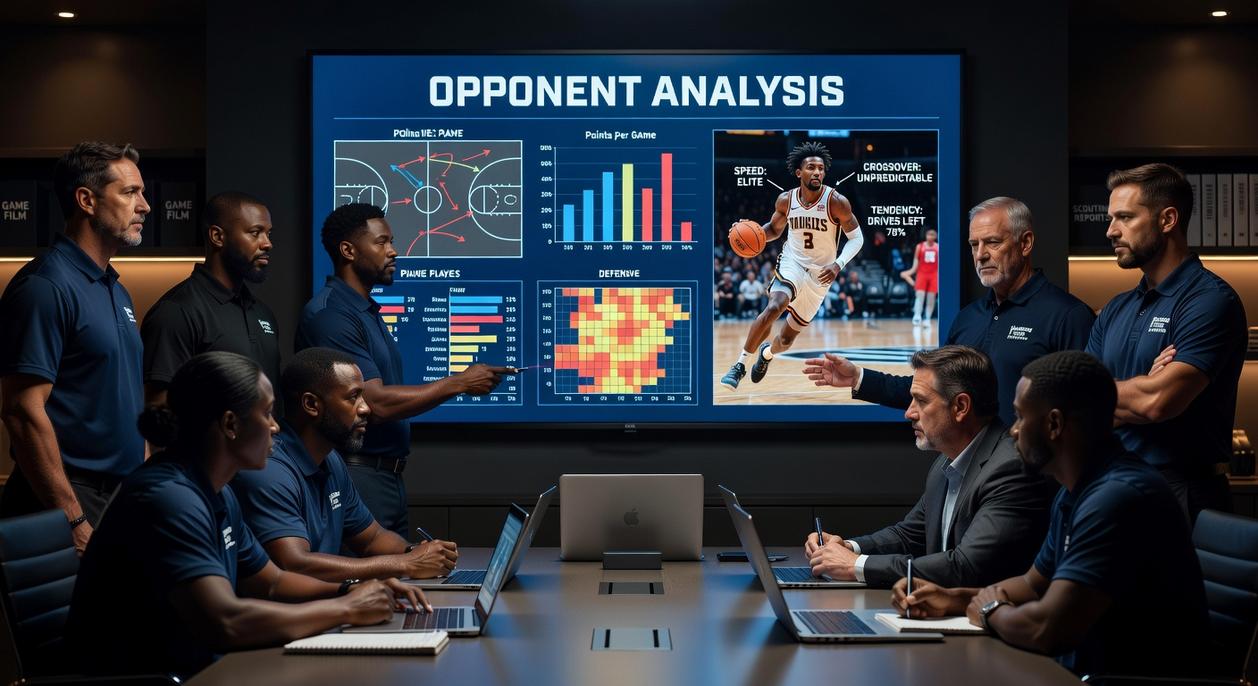
I’ve always believed that the fastest way to win isn’t improving your strengths—it’s weaponizing theirs. That shift in mindset changes everything.
1. Disrupting Tempo
Aggressive players thrive on speed and chaos. Slow them down. Use delays, feints, and baiting tactics to make them overcommit. When they lunge, you pivot. When they rush, you reset. Passive players, on the other hand, need comfort. Apply steady, low-risk pressure that forces small mistakes. Think controlled jabs, not wild swings. Patience beats panic every time. (And yes, watching an overconfident rusher self-destruct is deeply satisfying.)
2. Starving Resources
Every opponent runs on a critical resource—time, space, stamina, ammo, positioning, morale. Identify it early. Deny it relentlessly. When you choke off what they rely on most, you create what I call Momentum Moments—those pivotal stretches where they’re forced to act from weakness instead of confidence. Pro tip: track patterns, not just actions. Patterns reveal dependencies.
3. Positional Denial
Positioning isn’t about where you are. It’s about where they can’t be. If they dominate open lanes, collapse them. If they prefer close quarters, stretch the map. Make their comfort zone uncomfortable. I’m a firm believer that analyzing opponent strategies should start with terrain control before mechanics.
4. Countering the Win Condition
This is the real game. Once you identify their end goal, build your entire plan around denying it. If they need late-game scaling, accelerate early pressure. If they rely on a combo setup, break the chain before it forms. Their master plan should feel like a liability, not an advantage.
Force them to fight your fight. That’s how traps are set.
The Continuous Cycle of Adaptation
A static strategy is a losing strategy in any competitive arena. Think of it like bringing a paper map to a city that redraws its streets every night. You might start confident, but eventually you’re driving in circles. True dominance comes from out-thinking, not just out-playing.
So what’s the alternative? A living system: observation, analysis, adaptation. First, gather intelligence by watching patterns, timing, and tendencies. Next, break what you see down using the Four-Pillar framework, turning raw data into clear leverage points. Then adjust—exploit gaps, test counters, refine again. It’s less a straight line and more a feedback loop, like a thermostat constantly recalibrating.
Some argue you should just perfect your own game. But ignoring analyzing opponent strategies is like shadowboxing forever (great workout, terrible preparation).
In your next match, identify one pillar your opponent relies on and pressure it.
Mastery means owning their plan.
To gain a competitive edge, it’s crucial to dissect your opponent’s strategies through careful analysis of their past performances, as highlighted in our latest article, ‘Sffarehockey Statistics Today‘, which provides valuable insights into understanding game trends and player behaviors.
Level Up Your Competitive Edge Today
You came here looking for smarter ways to sharpen your gameplay, refine your tactics, and gain a real competitive edge. Now you understand how Momentum Moments, performance optimization, and analyzing opponent strategies can completely change the outcome of your matches.
The frustration of hitting a plateau, losing close games, or feeling one step behind your competition is real. Small mistakes, slow reactions, and missed patterns cost wins. But when you break down gameplay with purpose, optimize your gear, and commit to disciplined improvement, you stop reacting — and start controlling the game.
Now it’s time to act. Start applying these tactics in your next session. Review your recent matches. Focus on positioning, timing, and decision-making under pressure. Identify one weakness and turn it into a strength this week.
If you’re serious about winning more and competing at a higher level, don’t leave your performance to chance. Join thousands of competitive players who rely on proven breakdowns, tactical insights, and performance-driven strategies to stay ahead. Dive deeper, train smarter, and take control of your next victory today.
 There is a specific skill involved in explaining something clearly — one that is completely separate from actually knowing the subject. Zyphren Zolmuth has both. They has spent years working with sports gear optimization tips in a hands-on capacity, and an equal amount of time figuring out how to translate that experience into writing that people with different backgrounds can actually absorb and use.
Zyphren tends to approach complex subjects — Sports Gear Optimization Tips, Momentum Moments, Competitive Gaming Tactics being good examples — by starting with what the reader already knows, then building outward from there rather than dropping them in the deep end. It sounds like a small thing. In practice it makes a significant difference in whether someone finishes the article or abandons it halfway through. They is also good at knowing when to stop — a surprisingly underrated skill. Some writers bury useful information under so many caveats and qualifications that the point disappears. Zyphren knows where the point is and gets there without too many detours.
The practical effect of all this is that people who read Zyphren's work tend to come away actually capable of doing something with it. Not just vaguely informed — actually capable. For a writer working in sports gear optimization tips, that is probably the best possible outcome, and it's the standard Zyphren holds they's own work to.
There is a specific skill involved in explaining something clearly — one that is completely separate from actually knowing the subject. Zyphren Zolmuth has both. They has spent years working with sports gear optimization tips in a hands-on capacity, and an equal amount of time figuring out how to translate that experience into writing that people with different backgrounds can actually absorb and use.
Zyphren tends to approach complex subjects — Sports Gear Optimization Tips, Momentum Moments, Competitive Gaming Tactics being good examples — by starting with what the reader already knows, then building outward from there rather than dropping them in the deep end. It sounds like a small thing. In practice it makes a significant difference in whether someone finishes the article or abandons it halfway through. They is also good at knowing when to stop — a surprisingly underrated skill. Some writers bury useful information under so many caveats and qualifications that the point disappears. Zyphren knows where the point is and gets there without too many detours.
The practical effect of all this is that people who read Zyphren's work tend to come away actually capable of doing something with it. Not just vaguely informed — actually capable. For a writer working in sports gear optimization tips, that is probably the best possible outcome, and it's the standard Zyphren holds they's own work to.