
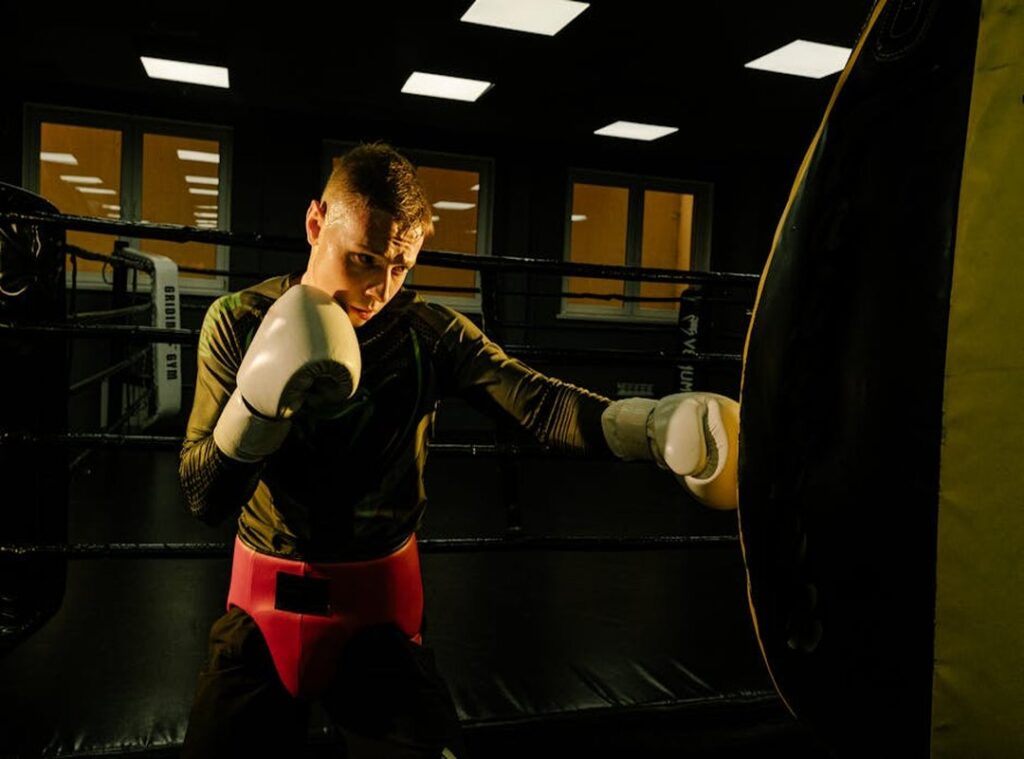
Ever blown a game because your reaction was too slow? We’ve all been there. It’s not just frustrating, it’s maddening.
Many folks think reflexes are just a gift from the gods, but that’s limiting. This belief keeps you stuck under a ceiling you can break through. Reflexes are not set in stone.
They can be trained, honed, sharpened. That’s what this article is all about.
I’m diving into the science behind the quickness of elite performers. Why trust me? I’ve dissected training methods from top athletes and gamers.
You need more than just speed; you need plan. Both physical and mental aspects play a role. This guide provides reflexes training techniques to help you gain a competitive edge.
Ready to transform your game? Let’s get started.
The Science of Speed: Reaction Chain Demystified
Understanding the difference between a simple reflex and complex reaction time is key. Reflexes are those involuntary actions, like yanking your hand away from a hot surface without thinking. They’re automatic, no brainpower needed.
But complex reactions? That’s a whole different ball game.
Complex reactions involve voluntary actions, requiring you to think and decide. Here’s the breakdown: You see or hear something (the stimulus). Your brain processes it, decides what to do, then sends a signal to your muscles which perform the action.
Think of it like a data packet traveling through a network. Each step in this “reaction chain” can be sped up with practice and training.
Now, where can you shave off milliseconds? This is where reflexes training techniques come into play. You can boost perception speed, boost decision-making efficiency, and improve neuromuscular signal transmission.
This is the difference between a good performer and an elite one. Milliseconds.
Doesn’t sound like much, right? But in the heat of competition, those milliseconds are everything. Imagine a gaming scenario.
Your ability to react quickly can make or break a win. The key to success lies in identifying and training these bottlenecks.
Pro tip: Regular practice and mental exercises can boost your cognitive processing speed. You’re not just training to react faster; you’re training to think faster. The payoff?
Better performance, quicker reflexes, and that coveted competitive edge. Keep pushing, because shaving off those milliseconds is what it’s all about.
Train Your Reflexes: Fast Mind Meets Fast Body
A quick mind is good, but you need a body that keeps pace. If your reflexes don’t match your mental speed, you’re not maximizing your potential. So how do you hone that neuromuscular response?
Start with drop-and-catch drills. This classic exercise is deceptively simple: drop a ball and catch it as fast as you can. Once that’s mastered, up the ante.
Use smaller objects, change the timing, or make specific hand catches. It’s the unpredictability that sharpens you.
Then there’s plyometric exercises. Explosive movements like box jumps or clap push-ups are gold. They’re not just flashy; they train your fast-twitch muscle fibers, the key to quick actions like mouse clicks or sudden jumps.
This kind of training bridges the gap between thought and action.
Ever tried vision and tracking drills? They’re not just for fighter pilots. Use a reaction ball, with its wild bounce, to test your limits.
Or dive into online visual tracking tools (yes, they’re out there). These tools boost the speed and precision of your initial stimulus response.
Now you’re probably wondering, why bother? Here’s the thing: better reflexes aren’t just about sports. They’re about everyday life.
Imagine performing at your best, whether defending in a game or catching your phone before it hits the floor.
For more sophisticated reflexes training techniques, check this resource. It’s not hype. It’s about getting results.
Pro tip? Consistency is king. It’s not just about doing the exercises but doing them regularly.
The more you commit, the sharper your reflexes become. Forget sporadic bursts of training; make it part of your routine. Watch your performance, and your confidence, soar.
Cognitive Conditioning: Prime Your Mind for Speed
When it comes to improving reflexes, cognitive training is a game-changer. Our mental processing speed often lags, becoming the bottleneck in high-stakes situations. You know what I mean.

You see it in competitive gaming, sports, and even everyday life. The brain’s ability to react swiftly and correctly is key. So, to some effective reflexes training techniques.
First up, Choice Reaction Time (CRT) Training. It’s easy to react to a single, expected stimulus. Like catching a ball tossed gently at you.
But when you need to choose the proper reaction from multiple options, things get tricky. CRT shines. Try apps that challenge you to respond rapidly to changing stimuli (think pressing ‘J’ for a blue square, ‘K’ for a red circle).
This keeps your mind sharp and responsive.
Next, let’s talk Pattern Recognition. Anticipation is the ultimate reflex enhancer. I recommend studying game replays or sports footage.
By internalizing opponent patterns, you train your brain to react before the action is complete. It’s like knowing the plot twist before it hits (spoilers, right?). This proactive approach can lead to faster, more effective reflexes.
Lastly, consider Sensory Filtering. The art of ‘tuning out’ irrelevant info is big. Focus on one specific sound in a noisy environment.
This exercise trains you to zero in on key cues while ignoring distractions. It’s like finding calm in chaos.
Want more on honing your mental edge? Check out psychology peak performance gaming. It’s a treasure trove for anyone serious about boosting their mental game.
Now, go sharpen those reflexes!
Reflex Training: Beyond the Basics
You know what’s overrated? Isolated drills. Sure, honing a single skill has its place, but if you want lasting improvement, you need an integrated system.
Reflexes training techniques should combine physical and cognitive drills to keep you sharp.
Here’s a sample schedule to get you started: Monday, do 10 minutes of plyometrics, followed by 5 minutes of CRT drills. On Tuesday, spend 15 minutes on pattern recognition reviews. The rest of the week?
Mix it up with agility ladders, spatial awareness exercises, and some good old-fashioned reaction ball work.
But let’s talk about the stuff people often forget: sleep, hydration, and nutrition. Sleep deprivation? It slows your reaction time measurably.
I mean, who wants to be sluggish during training? Hydration and nutrients like Omega-3s are important for keeping your brain firing on all cylinders. Without them, you’re just treading water.
Introducing new stimuli is key to breaking through plateaus. Stagnation is the enemy, my friend.
Now, how do you know if you’re making progress? Log your scores. Use reaction trainers, track your improvements, and don’t be afraid to change your drills.
Pro tip: If you find yourself stuck, take a step back and reassess your routine. Sometimes the simplest changes make the biggest difference. What have you learned from your own training mistakes?
We’ve all been there. It’s not about perfection. It’s about progress.
Boost Your Reflex Mastery Now
Slow reactions are no excuse. They’re barriers you can break with reflexes training techniques. The solution?
Consistent training for both mind and body. Transform your reaction time from a passive trait into an actively sharpened skill. Ready to start?
Choose one physical drill and one cognitive drill from what you’ve read. Practice them for just 10 minutes a day this week. That’s your challenge.
Your journey begins now. Those split-second advantages are yours for the taking. Want results?
Commit today and see the change. You’ve read enough. Now, it’s time to act.
Take control of your reflexes.
 There is a specific skill involved in explaining something clearly — one that is completely separate from actually knowing the subject. Bonnie Woffordanzo has both. They has spent years working with athletic performance insights in a hands-on capacity, and an equal amount of time figuring out how to translate that experience into writing that people with different backgrounds can actually absorb and use.
Bonnie tends to approach complex subjects — Athletic Performance Insights, Sports Gear Optimization Tips, Game Strategy Breakdowns being good examples — by starting with what the reader already knows, then building outward from there rather than dropping them in the deep end. It sounds like a small thing. In practice it makes a significant difference in whether someone finishes the article or abandons it halfway through. They is also good at knowing when to stop — a surprisingly underrated skill. Some writers bury useful information under so many caveats and qualifications that the point disappears. Bonnie knows where the point is and gets there without too many detours.
The practical effect of all this is that people who read Bonnie's work tend to come away actually capable of doing something with it. Not just vaguely informed — actually capable. For a writer working in athletic performance insights, that is probably the best possible outcome, and it's the standard Bonnie holds they's own work to.
There is a specific skill involved in explaining something clearly — one that is completely separate from actually knowing the subject. Bonnie Woffordanzo has both. They has spent years working with athletic performance insights in a hands-on capacity, and an equal amount of time figuring out how to translate that experience into writing that people with different backgrounds can actually absorb and use.
Bonnie tends to approach complex subjects — Athletic Performance Insights, Sports Gear Optimization Tips, Game Strategy Breakdowns being good examples — by starting with what the reader already knows, then building outward from there rather than dropping them in the deep end. It sounds like a small thing. In practice it makes a significant difference in whether someone finishes the article or abandons it halfway through. They is also good at knowing when to stop — a surprisingly underrated skill. Some writers bury useful information under so many caveats and qualifications that the point disappears. Bonnie knows where the point is and gets there without too many detours.
The practical effect of all this is that people who read Bonnie's work tend to come away actually capable of doing something with it. Not just vaguely informed — actually capable. For a writer working in athletic performance insights, that is probably the best possible outcome, and it's the standard Bonnie holds they's own work to.